Women, Life, Freedom
It was with the warm April weather of 2011 that the Arab Spring fully blossomed in Syria. At first hailed as democratic progress, the dream suddenly revealed itself as a nightmare. Factional violence, the Assad regimes stubborn despotism, and the competing agendas of outside powers turned the lives of all but a few Syrians into ruin.
We entered the picture early, helping Christian families whose villages suffered the barbarity of extremist militias.
The Christians’ misery, mostly ignored by the West, presaged what became common knowledge in 2014, when Syria seized the world’s attention with headlines seemingly from another age: beheadings, enslavement of women and children, the imposition of medieval legal codes and the flight in terror by millions from these incomprehensible horrors.
We were there. We helped shepherd thousands across the mine-laden frontiers. We fed many and directed many more to safety and shelter. A year later, we helped resettle tens of thousands back in Syria when it was safe to go home.
We are still there—even if the dispossessed women and children of that time now seem invisible. They are invisible because they no longer generate advertising income for broadcasters and publishers. But of course, they are still there and we are still working.
Local Solutions
The best remedies are local. Through grassroots partnerships, we can achieve real and long-lasting peace and economic stability. We can help people help themselves. We can encourage people who are working for deep, original and homegrown solutions.
That’s what we’ve achieved with our partners, a community of women along the Syrian border. They are well-suited to the work since they have strong cultural and geographical connections with the northern Syrian homeland of the exiles.
Some 400,000 refugees still live in their area. Seventy percent of them are women and children. Our work with them has included a social worker training program, music courses, handicrafts, an agricultural cooperative, legal assistance, and psychological support.
This work is not limited to the refugees, however. Many local women suffer the same difficulties faced by the newcomers.
One Recipe, One Story
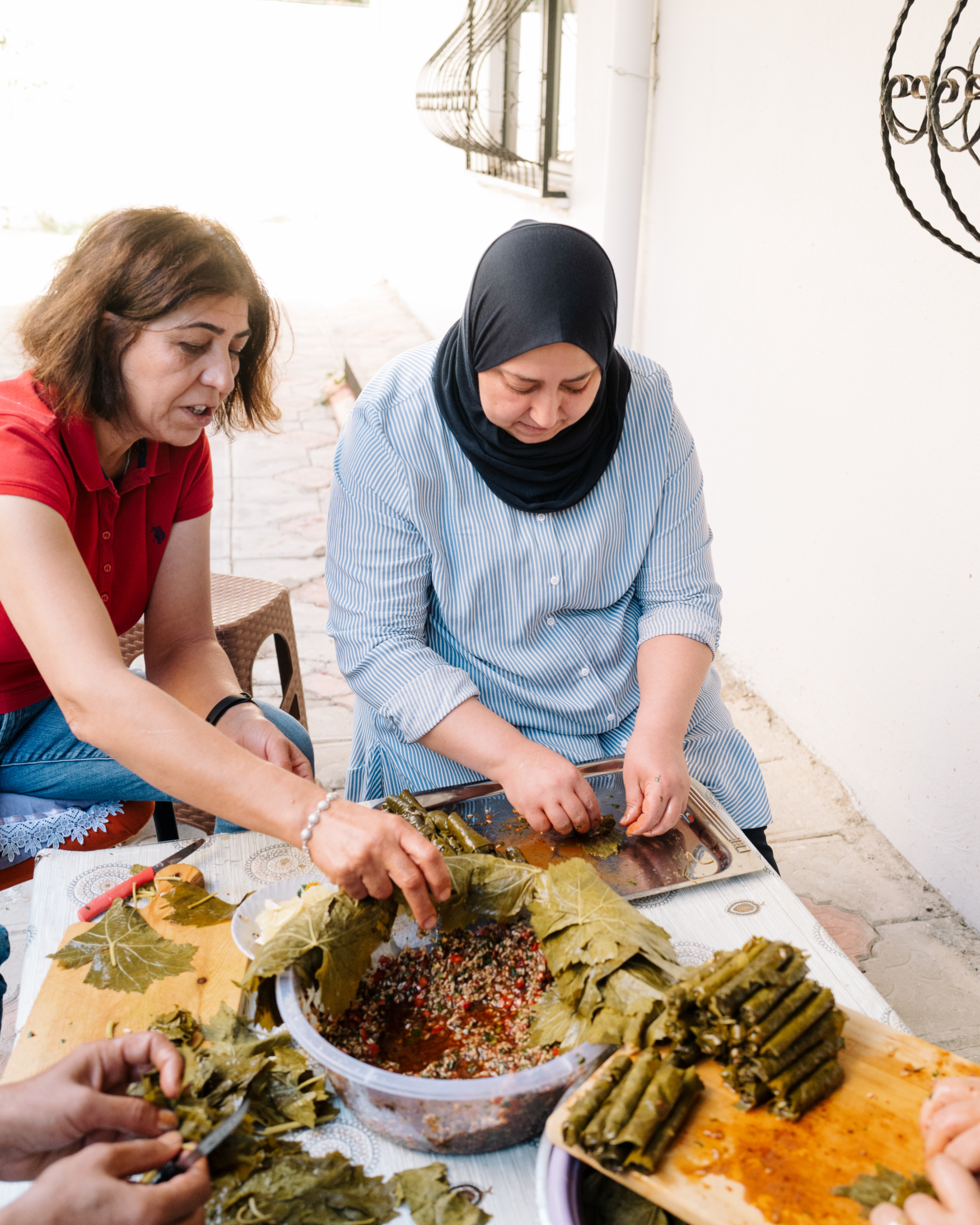
We explored this common ground through a community kitchen project that matched local women with refugees. The "One Story, One Recipe" program brought women together for the purpose of sharing a recipe and personal story. Many have said that this marked the first time anyone had asked them about their story. Again and again women expressed their gratitude for simply being heard.
“In the kitchen, we began to explain feelings and experiences that we’d silenced. Things we never spoke of, things we even hid from ourselves. We listened to each other with ease. It was like drinking water—our lives flowed from one to the other. Our languages were sometimes different, but we didn’t need to speak the same language because we were meeting in our lost voices.”
The project leader summed it up: “We matched 10 local women with 10 refugees. Once a week, they come together to cook, demonstrating recipes from their cultures, creating empathy and partnership between the women. It is a unique model for women’s work. Non-political and non-ideological—it is profoundly relational.”
Through the program, women also found encouragement to write their stories along with their recipes. “It was natural. The women meshed their personal stories with their methods for preparing dishes that were special to them. There are memories in recipes.”
Honored and empowered, they were pleased that someone thought their lives were worth hearing about. Speaking for the group, one of the refugees urged us to share their stories with you: “Write my story, let everyone know!” Another said, “Until this day no one has ever been curious about our stories!” Another spoke of healing, “As I told my story I felt relief, I have been living with this burden for years.” And another echoed the plea: “Don’t forget us!”
It's a plea that women in Iran also share. The death of 22-year-old Mahsa Amini in September 2022 illustrates the problem. She was killed while in the custody of Iran’s morality police. This sparked the “Women, Life, Freedom” protests that spread across Iran, Turkey, Iraq and Syria. The movement highlighted the connection between women and society at large: where women are oppressed, all of society suffers violence, loss of freedom, injustice, and poverty.
Little has changed since then, indeed, violence against women and girls in the Middle East remains a severe and escalating issue, characterized by high rates of femicide, domestic abuse, and systemic failures in protection. In Iran itself the authorities responded to the protests by doubling down with the 2023 “Bill to Support the Culture of Chastity and Hijab,” which aimed to further entrench control of women’s dress and behavior.
Hope
Even with the recent Iran war, we have reason to hope, and with a Kurdish peace process progressing in Turkey and the stabilization of Syria, opportunities for good are growing. So on that note, let's provide some encouragement to you. Enjoy the sample stories and recipes shared with you below. Let us know if you prepare a meal and send us a photo to share with the women. They will be thrilled to make that connection with you.
🔗Download recipe and story book here!
Raana's recipe from Syria: Aleppo Lamb Sarma
bi-monthly newsletter
post or email
for email and postal subscriptions
lutheran.mideast@gmail.com