Kurdish Language Schools in Iran - Our History Parallels Events Today
At the turn of the 20th century, as ethnic nationalism began to replace old empires, Kurds began to wonder where they fit in. Should they fight for a political space, a country in their own name? This was naturally a question that challenged the founders of our organization working in Soujboulak, the predominantly Kurdish city that is today called Mahabad in Iran.
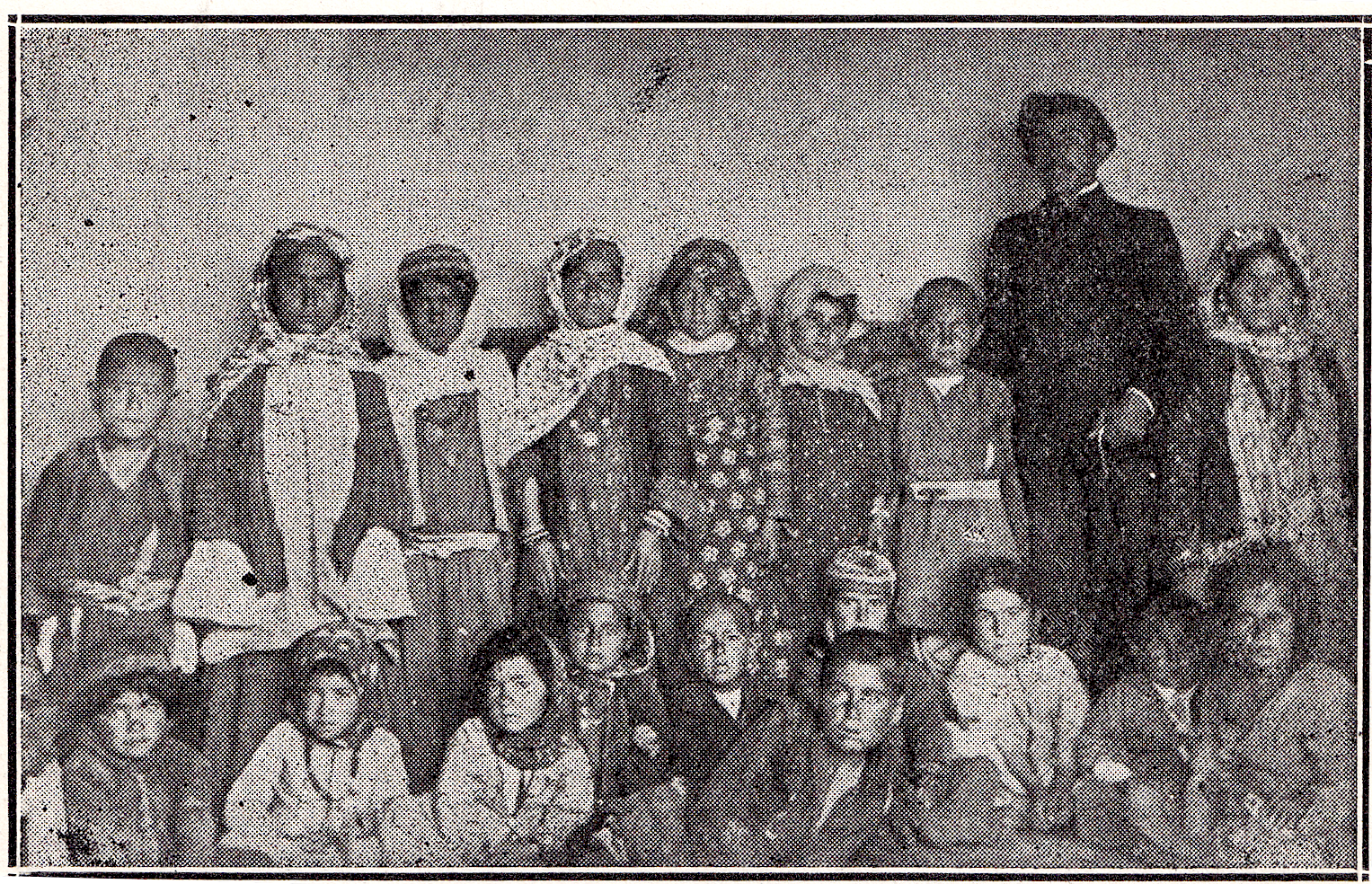
Our charter was explicitly to serve Kurds. The ministry’s newsletter bore the title “Kurdistan” and introduced the Kurdish people for the first time to Americans. Our workers in Soujboulak and the staff in America supported the Kurdish people and defended their reputation in the press. We opened an orphanage, the city’s first medical clinic, wrote a foundational Kurdish grammar book, published a Kurdish literary paper, and started Kurdish-language schools.
The schools Fossum and his colleagues established were at first opposed by the religious class, who were unsettled by the prospect of losing students and by the Christian education included in the curriculum. But when L.O. Fossum and his colleagues could no longer receive funds from America during the tense months leading up to the war, these same Kurds supported them. Among those supporters was Qazi Ali, father of Mahabad Republic founder, Qazi Muhammad. They not only provided for the missionaries' living, but provided the means for Fossum and nurse Augusta Gudhart to return after the war, advancing them the equivalent of $60,000. “We are indeed greatly indebted to those noble men, who made our missionaries’ safe return possible,” wrote the mission's director in Minnesota.
When they did return to Soujbulak after the war, the situation was very different. There were many orphans and the population had swelled. We assessed that there were 40,000 Kurds in town. Seventy-five percent were old women, young widows and orphans. The other 25% were elderly men and the disabled and wounded. Before the war there were no more than 10,000 inhabitants in Soujbolak. The local population urged us to reopen the schools. The missionaries did so, teaching English and a Kurdish curriculum of language, geography, and arithmetic.
This Kurdish focus did not exclude anyone, however. Our services were open to all, which meant Persians, Azeris, Armenians, Assyrians, Kurds, and Jews. For the Lutherans, the point was to share the love of God and the good news of a transcendent kingdom, not the false hope of political power.
Still, nationalism increasingly became a driving force in the region. By the mid-1920s, the Ottoman Empire was dissolved. Arab identity formed the basis of the newly founded Syria and Iraq, and a Turkish state replaced the Ottoman heartland in Anatolia. Persia too became increasingly a place first and foremost for Persians.
Fossum’s successor, Henry A. Mueller reflected on this as our work faced expulsion from Soujboulak in 1936.
It all had to do with our insistence on supporting Kurdish language education for those who desired it. (Mueller was also future Kurdish Republic-founder Qazi Muhammad’s English teacher.)
Nationalism. Our LOM executive board members [need not] be told in detail again the precarious national existence of the Kurds. The Kurds most graciously and genuinely have always welcomed our mission in their midst. No one can question that. The Persian government however, in its rise to power, has made this autocratic power felt on the remotest borders and strongholds of Kurdistan: Firing squads, hangings, secret executions, exile, etc., are common methods of procedure vs. all those who would not be loyal [Persian] nationalists. “Persia for the Persians” is the watchword. Even the Turkish name Soujbulak was changed to the Persian Mahabad.
From this one angle we may say that our LOM finds itself among the Kurds—a people of whom down the ages it has been said in an Arabic proverb; “Allah has created three plagues in this world; namely, the locust, the rat, and the Kurd!”
With such a feeling of nervous high tension we had long expected the order that came to us from the Persian Government on March 8, 1936: “The LOM must get away from Kurdistan.”
The local Kurds were arrested and forced to tell whether we spoke of politics in our meetings; they were asked whether we even offered money for their contact, and many of the Kurdish Gospels were confiscated wherever found in Kurdish homes. Our itinerating was forbidden. We were trailed when visiting, and informers were stationed across from our mission to report to police whoever entered. All kinds of obstacles were put in the way of dispensary work and Miss Gudhart was outrightly forbidden to practice.
We love our Kurdish people and yet that very thing, we are not supposed to do in the eyes of the Persian officials.
On the 15th of August, 1936, I was escorted on foot by armed guards with mounted bayonets to the Iraq frontier outpost. But at the last high mountain pass overlooking Persian Kurdistan, I turned once more saying a prayer aloud, and with outstretched arms over the fields of our labor, I repeated the Aaronic Blessing [in Kurdish].
May the Lord bless you and keep you;
May the Lord make His face shine upon you and be gracious to you;
May the Lord turn His face toward you and give you peace.
Firing squads, hangings, secret executions, mass arrests. All to do with Kurdish identity and language. That was 1936, but just as accurately describes the situation now as Iran’s theocratic regime intensifies its crackdown on Kurdish civilians, including cross-border missile attacks on displaced Iranian Kurds in Iraq.
Kurdish language and culture activists are routinely arrested and charged. Fifteen arrests were documented in 2025 and the crackdown has intensified since the January 2026 protests, with the number of arrests for language activity increasing. Hardly a week goes by without a report of another detention.
What should we do? Our calling remains the same. We can support the widows, the families of the imprisoned, and the old and infirmed. Compassion, consolation, healing, and love expressed in real action is a clear witness to the heavenly and non-political kingdom taught by Jesus. Among the Kurds of Iran, this is the Good News—the Gospel—today.
bi-monthly newsletter
post or email
for email and postal subscriptions
lutheran.mideast@gmail.com